Who We Are
STEER is a program established at Stanford University focused on guiding "what to Build, where to Innovate, and how to Invest" in emerging energy technologies, from batteries to nuclear.
Founded in Fall of 2023 originally as a partnership between Stanford'sPrecourt Institute of Energyand the SLAC National Laboratory, STEER has grown to be a key priority in the Stanford ecosystem to reimagine industry partnerships, targeted research & development, and strategic investments.
Leadership
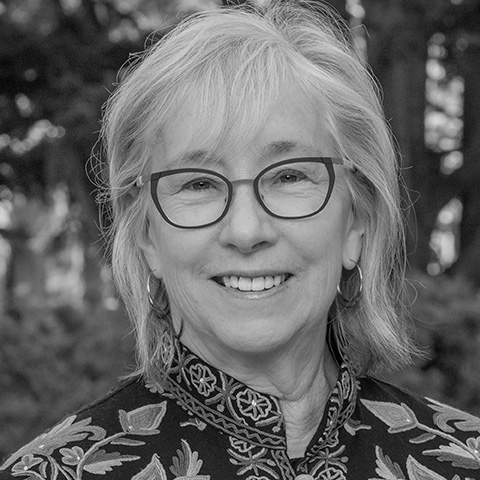

Precourt Family Professor of Energy Science & Engineering


Director & Senior Fellow, Precourt Institute for Energy Professor of Materials Science & Engineering, Energy Science & Engineering, and Photon Science

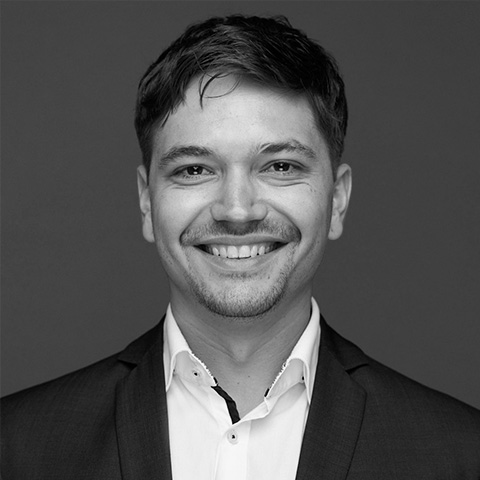
Adrian is the Founder and Team Lead of STEER. The mission of STEER is to use deep engineering analysis to overcome economic uncertainties of emerging energy technologies to unlock strategic investments and innovations. Prior to STEER, Adrian spent 8+ years as the Founder and CTO of a Li-ion battery cell manufacturing company, EnPower, Inc., where he still serves as a Board Director. Adrian drove technology development and scale-up at EnPower from 2014-2022, taking the company from its Texas roots through Tennessee, Arizona, and finally Indianapolis, where EnPower acquired a brownfield factory and is now scaling to several hundred MWh/y of high-performance cells for premium markets, spearheading the domestic production of advanced Li-ion batteries. Adrian obtained his B.S. in Material Science & Engineering from Rice University in Houston, TX and is currently simultaneously pursuing his PhD in Materials Science & Engineering at Stanford University.
STEER STAFF


Dr. Karan Bhuwalka leads the materials supply chain modeling at STEER, a research group that conducts rigorous techno-economic analysis to guide investment, innovation, and policy for the energy transition. Karan's research integrates economics, statistics, manufacturing and materials science to identify pathways to sustainably scale-up critical minerals production. Scaling-up energy supply chains rapidly while minimising life-cycle impacts requires aligning technology, markets and policies. STEER takes a systems approach that links engineering process models with supply and demand considerations to inform decision-making under uncertainty. Karan's current work is focused on modeling graphite production. Previous work spans lithium, nickel, recycled plastics systems and Bayesian modeling to reduce uncertainity in material demand.


Jing obtained her PhD in Ecology from Tsinghua University advised by Prof. Qiang Zhang, served as a visiting scholar at the Pacific Northwest National Laboratory, and began her postdoctoral research with Prof. Steven Davis at the University of California, Irvine. Her primary research interests include net-zero emission energy and land-use systems, and the co-control and co-benefit of climate and air pollution.


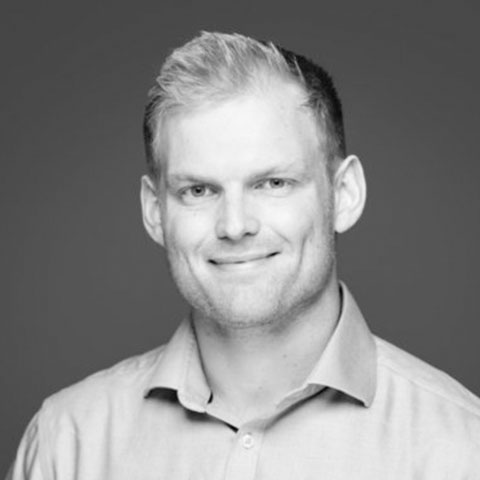
Leo joined STEER in May 2025 and leads its work on carbon capture technologies, including flue gas and ambient air systems. In line with STEER’s core principles, the techno-economic modeling is closely informed by feedback from public and private stakeholders, helping to deliver up-to-date cost benchmarks for emerging energy technologies and hard-to-abate mitigation options. By elevating deep technical analyses to the system and market level, these insights support and unlock strategic investment opportunities. Leo holds degrees in engineering and policy from ETH Zurich and the University of Cambridge. During his PhD, he researched decarbonization and competitiveness strategies for lithium-ion batteries.
Student Researchers

Julia Frohmann is a PhD candidate in Energy Science and Engineering, and leads demand-side battery utilization modeling at STEER. Her research focuses on the feasibility of large-scale grid storage deployment in the US by evaluating battery energy storage revenue generation potential. Julia's key areas of interest are electricity market operations, and macro-scale energy systems modeling. Previous work focused on renewable grid penetration effect on electricity exchange variability and modeling optimal integration of power-to-heat-to-power storage. Julia obtained her bachelors in Mechanical Engineering and masters in Energy Engineering from RWTH Aachen, Germany.